
Industrial-Grade Animal Fat Primary Rendering
Explore MoreFood-Grade Animal Fat Primary Rendering
Explore MoreRendered fish fat is the lipid fraction recovered in a rendering plant from fish by-products after heating and separation. For processing plants handling heads, viscera, and trimmings, it offers a straightforward way to reduce organic waste volume and create a usable output stream.
In this article, we explain where rendered fish fat originates, how rendering plants typically produce it, and how processors use the recovered fat across industrial and feed-related applications.
Fish processors recover fat as part of broader fish byproducts utilization in fish processing, converting high‑moisture residues with residual oil—such as heads, viscera, and trimmings—into usable output streams. These often include:
Materials vary depending on species, catch cycles, and production routines. A well-designed recovery system doesn’t require uniform input—it just needs steady flow and timely handling to keep the process stable.
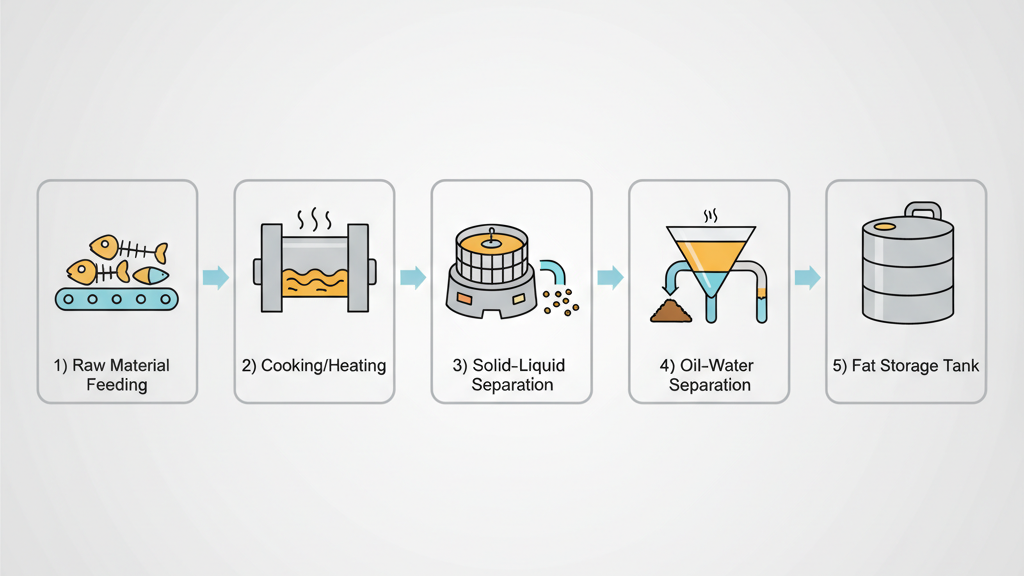
Fish fat recovery lines typically follow a sequence of five stages. Each stage supports the next, and overall line stability depends more on consistency than precision.
Raw materials are fed into the system at a controlled rate. Uneven feeding can cause surges in the cooker and reduce separation efficiency later in the process.
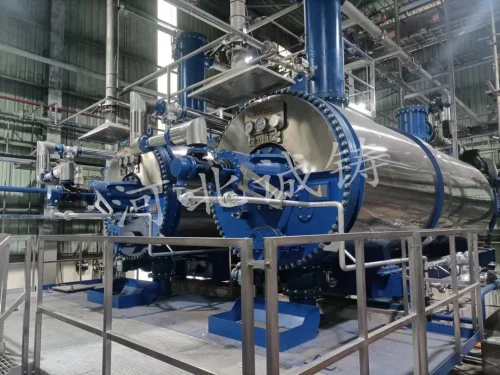
In the cooking stage, heat breaks down cellular structure and releases fat into the liquid phase. The objective is not to overheat or maximize yield, but to maintain predictable fat release under changing feedstock conditions.
After cooking, the material is separated into a solid press cake and a liquid stream containing fat, water, and fine particles. Efficient separation here reduces the load on downstream tanks and clarifiers.
The liquid stream is then separated into a fat-rich layer and a water-rich layer. The cleaner this split, the easier it is to hold the fat for reuse or sale.
Recovered fish fat is transferred to tanks for holding and downstream use. Steady flow, clean piping, and proper drainage help reduce settling issues and support better tank hygiene.
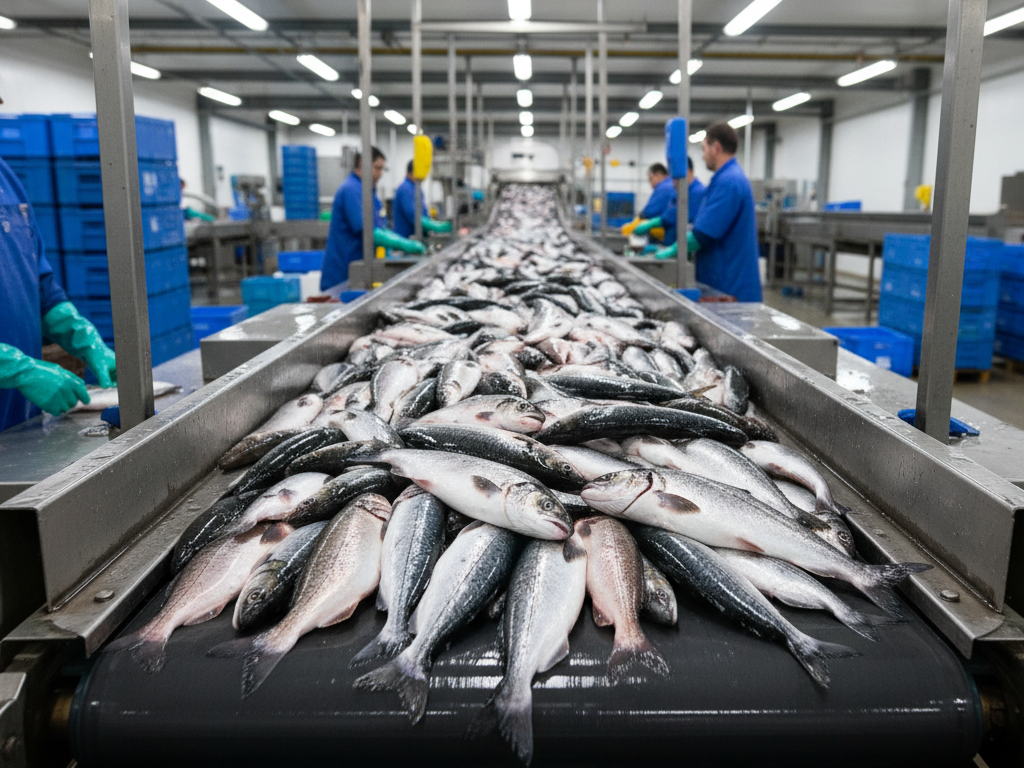
Processing plants route the recovered fat stream into various downstream uses, depending on handling quality and local demand:
Many facilities do not further refine the fat. The focus is on stable recovery, easy storage, and simple transport to known end-users.
Several factors influence how predictable and usable the fat stream will be:
Improvements in daily output usually come from better coordination, not expensive add-ons.
Rendered fish fat is not a premium oil or a specialty product—it is a usable by-product that depends on simple, consistent processing. When a line runs smoothly, the fat stream becomes a manageable part of overall plant output: easier to pump, easier to store, and easier to sell.
If your facility generates high-moisture fish waste and has no clear recovery route, setting up a steady rendering line may be one of the most practical ways to reduce disposal costs and increase material utilization.
 Industry Success Case
 Industry Success Case
 Industry Success Case
 Industry Success Case
 Industry Success Case
 Industry Success Case