
Industrial-Grade Animal Fat Primary Rendering
Explore MoreFood-Grade Animal Fat Primary Rendering
Explore MoreProcess steam from cooking, boiling, and drying equipment carries heat, moisture, and fine contaminants. A properly selected condenser system turns that steam into liquid for controlled collection, supports stable downstream operation, and helps keep waste gas treatment performance consistent.
This guide compares air-cooled and water-cooled condenser systems used in rendering plants, then walks through a practical selection checklist.
Rendering lines run on thermal processes. Cookers and dryers release large volumes of hot vapor that must be managed reliably. Condensing that vapor helps you:
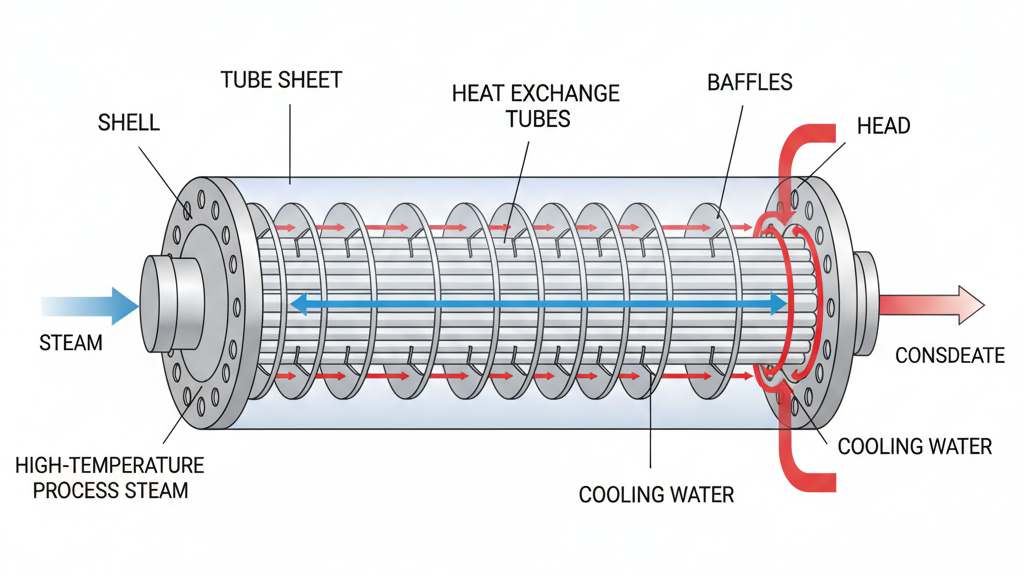
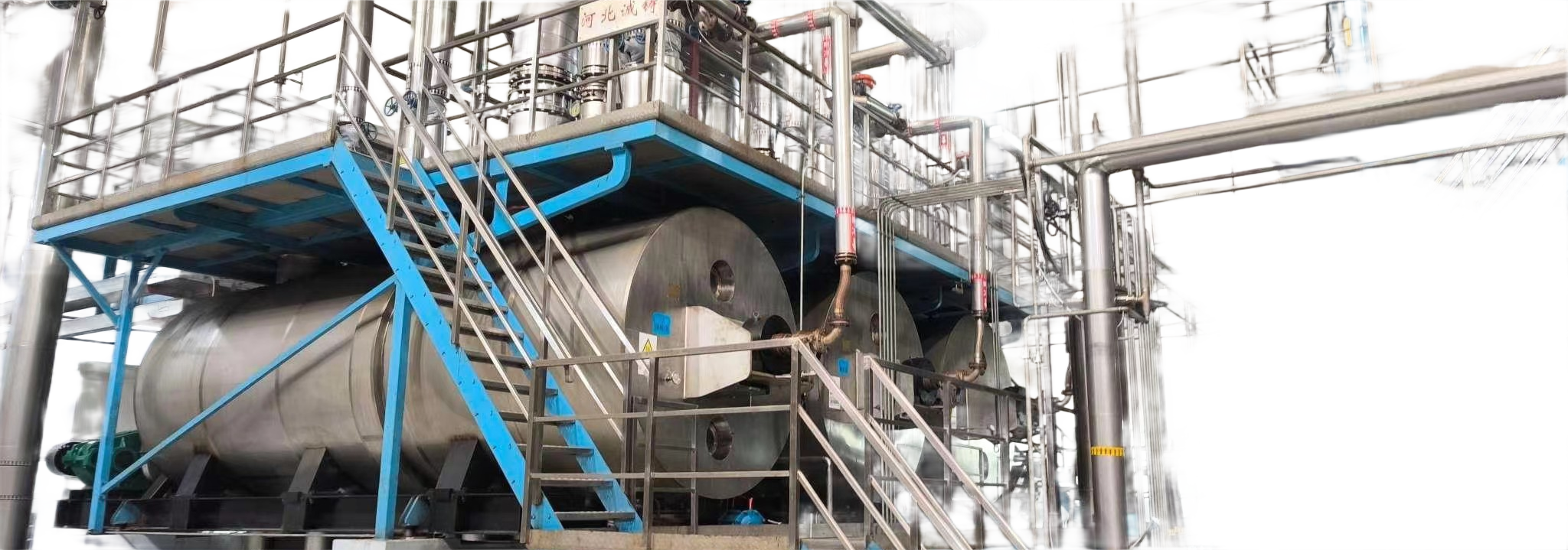
We design and manufacture our condensers to handle process steam discharged from cooking, boiling, and drying equipment. A typical water-cooled shell and tube condenser includes these core components:
Process steam flows smoothly inside the carefully arranged heat exchange tubes. Cooling water moves along the tube bundle in countercurrent heat exchange to remove heat efficiently. A multi-pass tube-side design helps improve the internal heat transfer conditions, supporting efficient condensation and stable heat removal for industrial duty.
In waste gas treatment, the condenser condenses waste gas or dirty steam into liquid for controlled collection.
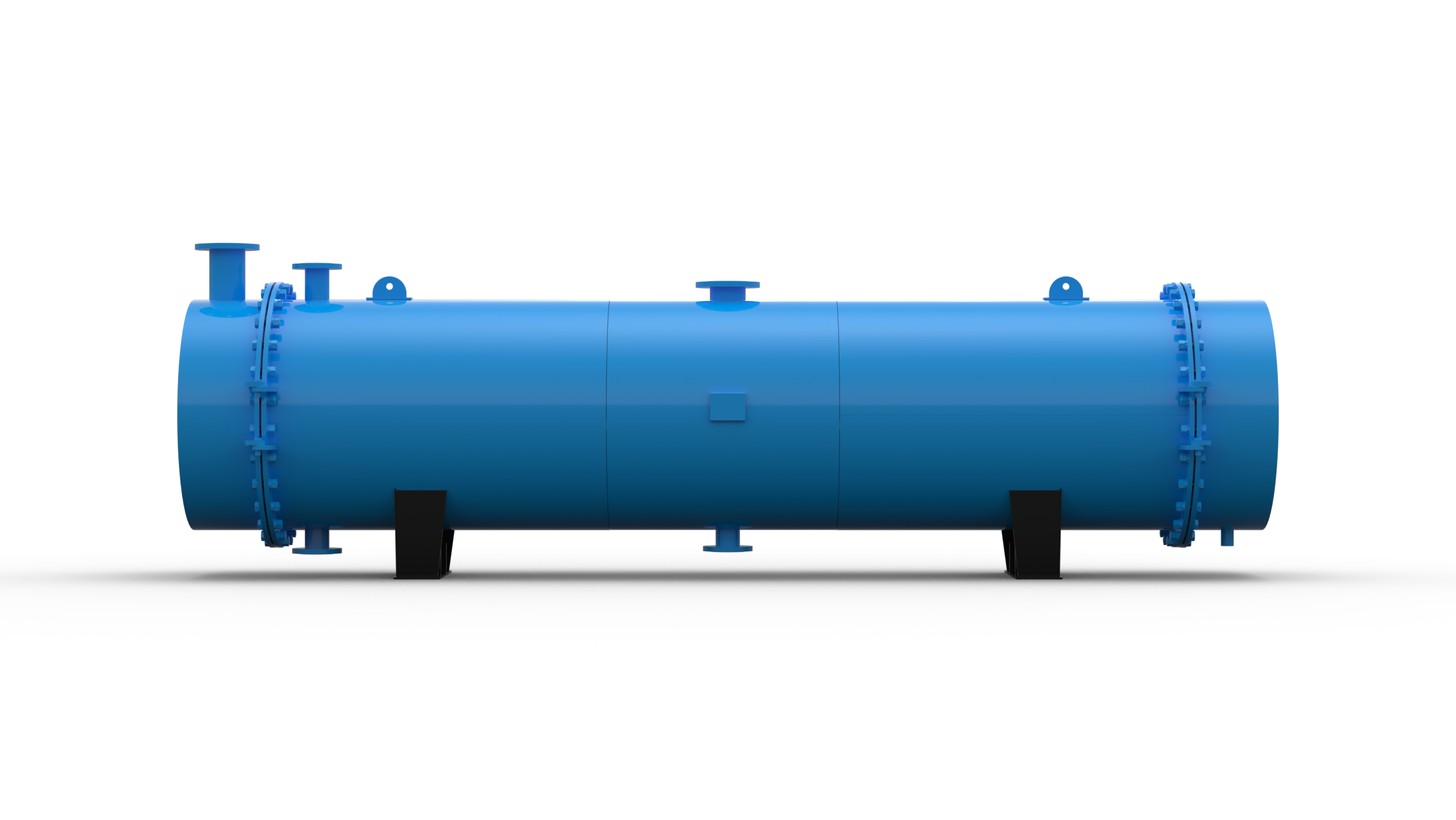
Water-cooled shell and tube condensers use circulating water to absorb and remove heat. They are commonly selected when:
Water-cooled designs are widely used in industrial environments where reliable heat removal is a priority.
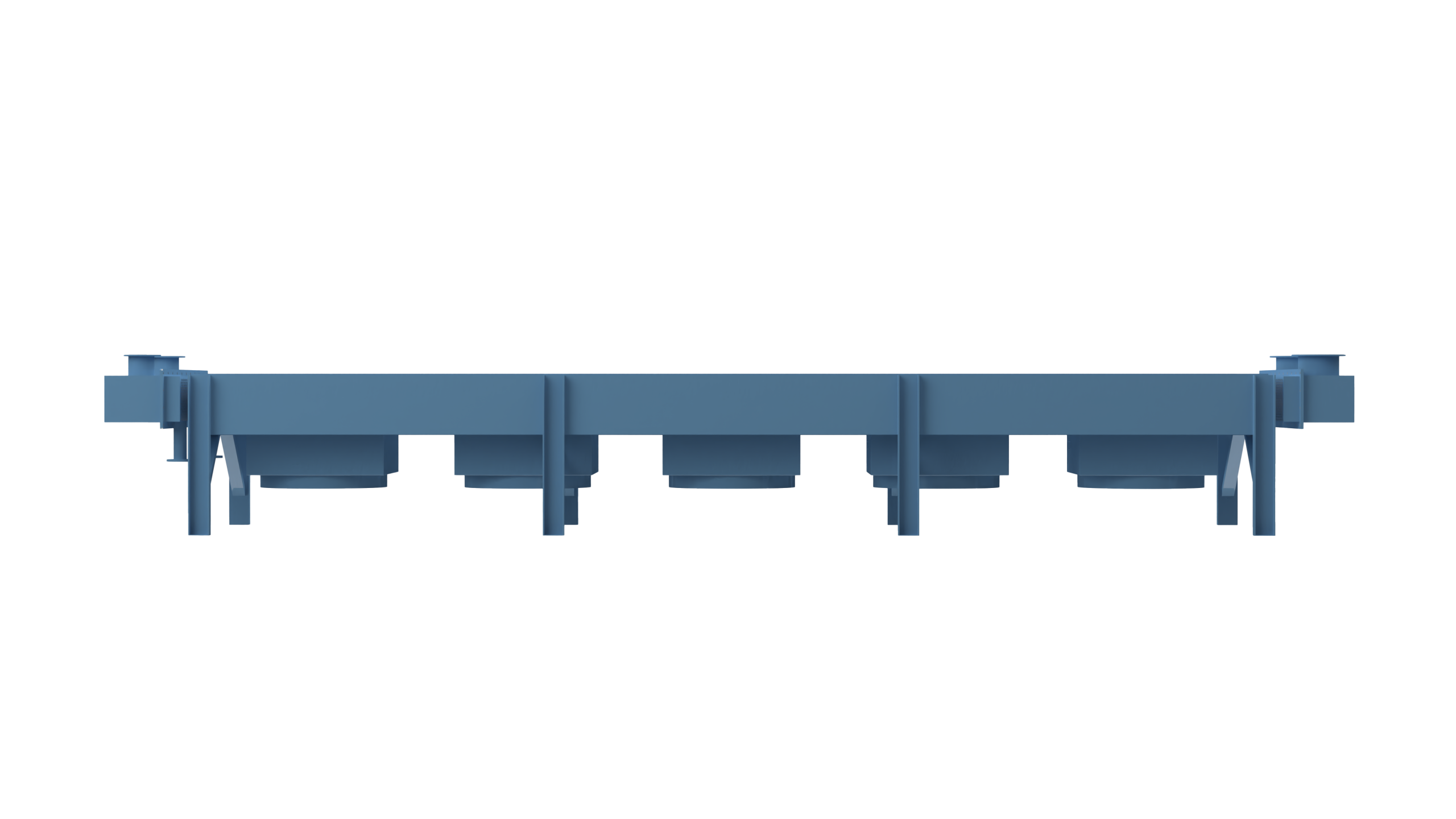
Air-cooled condensers use air as the cooling medium and rely on air-side heat transfer to complete condensation. They are commonly selected when:
Air-cooled options can be a good fit in sites with favorable ambient conditions and clear airflow.
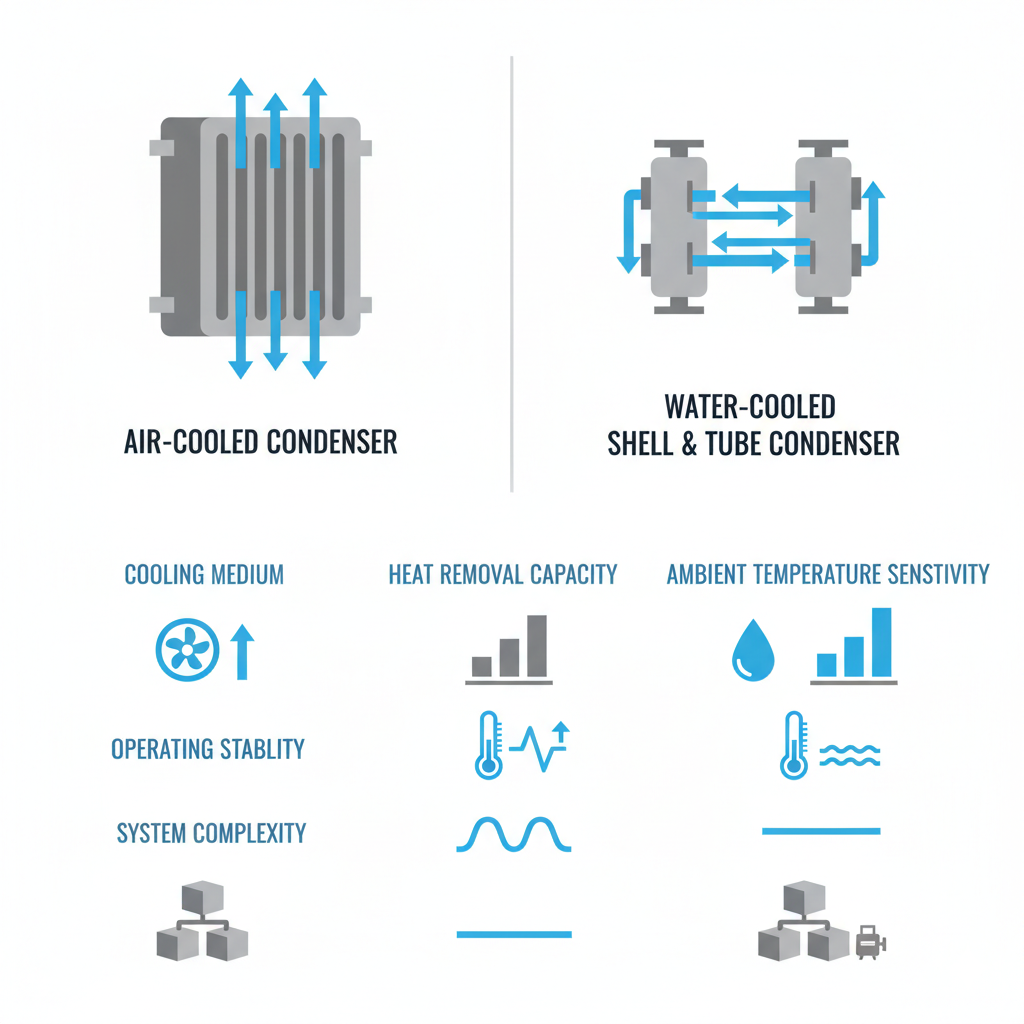
| Aspect | Air-Cooled | Water-Cooled Shell and Tube |
|---|---|---|
| Cooling medium | Air | Water |
| Heat removal capacity | Moderate to high, depends on ambient conditions and airflow | High, stable under heavy loads |
| Impact of ambient temperature | High | Lower |
| System requirements | Fewer water-side components | Requires water circulation and water-side management |
| Operating stability | Can vary with season and airflow | More stable across operating changes |
| Typical best-fit | Outdoor, well-ventilated sites with cooler ambient conditions and limited water | High-load lines and high-temperature industrial environments |
Selection is a system decision. Use this checklist to decide quickly.
Identify which equipment is discharging steam:
Higher and more continuous steam loads usually favor water-cooled systems for stable heat rejection. Air-cooled systems may fit lower loads or locations where water-side infrastructure is not practical.
Air-cooled condensers perform best where airflow is reliable and the installation location supports heat rejection, especially in cooler ambient conditions. Water-cooled condensers are often preferred when the plant environment is hot or when heat must be discharged efficiently regardless of season.
If you need consistent condensing performance to prevent downstream fluctuations, choose a water-cooled system. It delivers more stable cooling because ambient air changes affect it less.
If your site can accept seasonal performance variation, choose an air-cooled condenser, especially when you have limited water supply.
Air-cooled systems often reduce water-side complexity. Water-cooled systems can deliver higher and steadier performance but require water circulation and practical water-side management. The right choice depends on your site conditions and operating priorities.
Choose the condenser type that aligns with:
During the rendering process, plants commonly use condenser systems in these areas:
Air-cooled and water-cooled condenser systems can both work well in rendering plants when the selection matches real operating conditions. Air-cooled solutions fit outdoor, well-ventilated sites with relatively low ambient temperature and limited water-side infrastructure. Water-cooled shell and tube condensers fit high-load lines and applications that require stable, efficient heat removal in hot industrial environments.
 Industry Success Case
 Industry Success Case
 Industry Success Case
 Industry Success Case

Chinese (Simplified)

English

Russian