
Industrial-Grade Animal Fat Primary Rendering
Explore MoreFood-Grade Animal Fat Primary Rendering
Explore More English
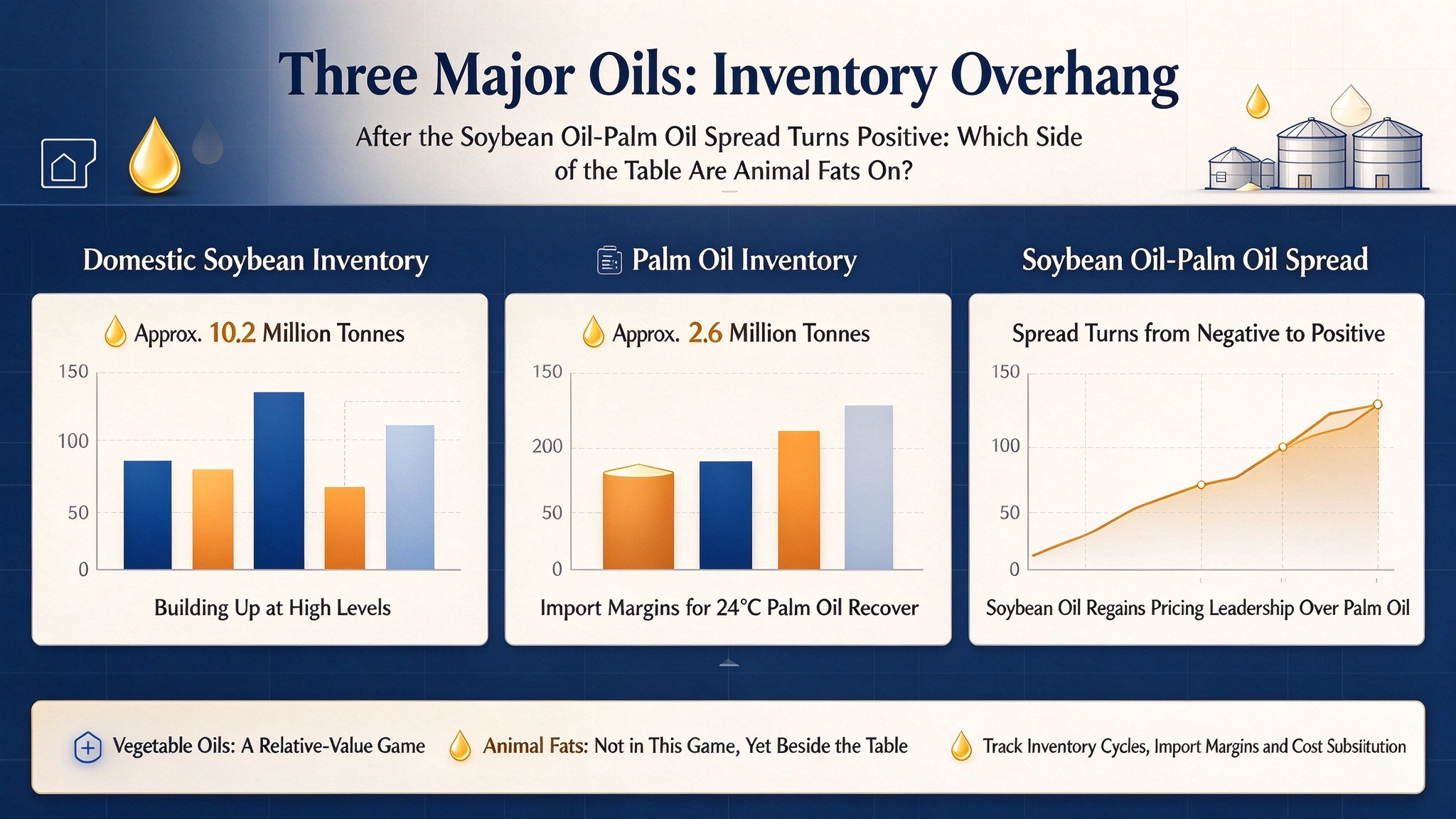
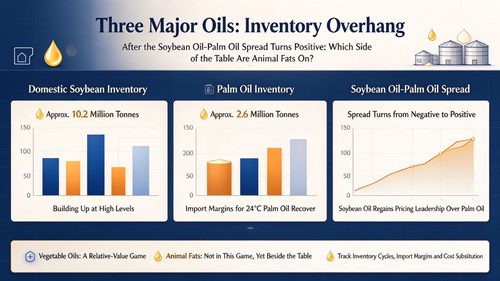
In early November, China's oils market presented a striking set of numbers: per the November 3 market bulletin of the Inner Mongolia Grain and Material Reserves Bureau,24-degree palm oil was at RMB 6,200-6,300/ton and first-grade soybean oil at RMB 7,450-7,550/ton in port spot markets,while commercial stocks of the three major vegetable oils reached 2.96 million tons as of October 30 — still above the same period in previous years. More crucially,the domestic spot soybean oil-palm oil spread has officially turned from negative to positive, with soybean oil trading at a premium again.BOC International Futures commented that this "reopens the substitution window for palm oil in food processing."
Among Vegetable Oils, It Is a Price-Comparison Game
How much oil goes into feed and food processing is largely not a matter of preference but of "which is cheaper." The moment the soy-palm spread turned positive,palm oil began siphoning off soybean oil demand on price;with Malaysian palm stocks at 3.51 million tons in September and domestic palm oil inventories at 1.2176 million tons (up 100.56% year-on-year),the destocking pressure means this game won't stop anytime soon. On the same formulation sheet, soybean,rapeseed and palm oils substitute for one another — price is the baton.
Animal Fats: Not in This Game, but at the Table
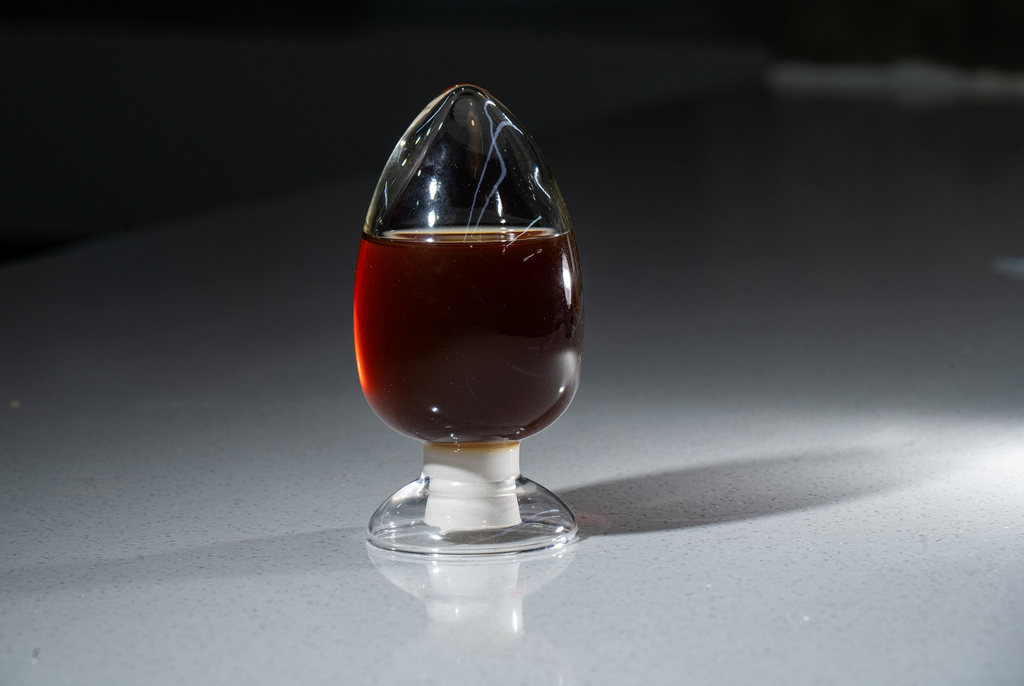
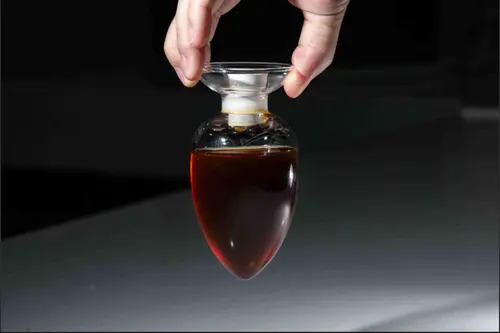
Notably, animal fats (beef tallow, lard, poultry fat) never join the "soy-palm-rapeseed" civil war, because they play by a different pricing logic.Vegetable oils are dominated by unsaturated fatty acids, while animal fats are dominated by saturated ones — better thermal stability,more stable energy, and no trans fats from hydrogenation. More importantly, animal fats are "non-grain":they come from the Rendering of slaughterhouse by-products and do not compete with the grain and oil supply.When vegetable oil inventories weigh on prices, animal fats' comparative disadvantage is passively magnified; but once vegetable oil prices rally,the substitution space for animal fats reopens. They are not a player at the table — yet the dealer must always keep an eye on them.

What the Upstream and Downstream Should Watch This Winter
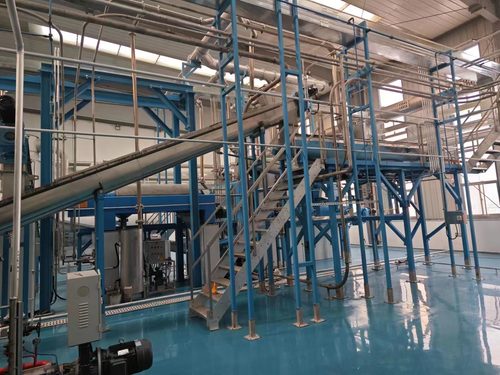
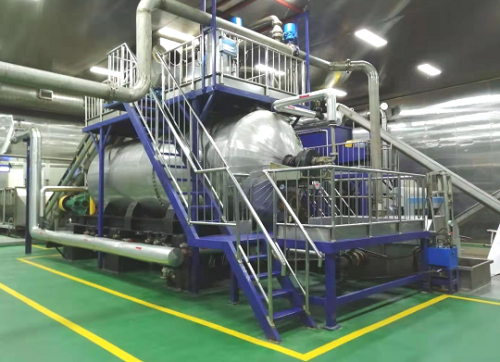
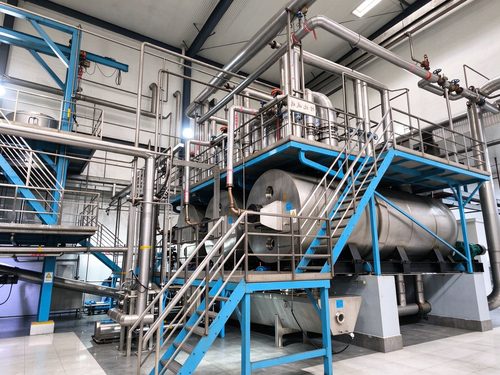
For feed mills and food processors downstream, Q4 is a window for formulation adjustments: the cheaper the vegetable oils,the more convincing animal fats quotations must be — purity, FFA (free fatty acid) control and stability metrics are all bargaining chips on the quote sheet.For slaughterhouses and rendering plants upstream, the autumn-winter slaughter peak brings more raw material,while low vegetable oil prices suppress the market; the ability to grade output between crude and refined, and a stable oil yield,determine whether this batch is sold at feed grade or holds the industrial and food-grade premium.Liande (a brand of Hebei Chengzhu Machinery Group) offers complete animal fats rendering plants —rom melting kettles and screw presses to decanter centrifuges and fat refining— helping users keep quality chips worth playing even in the season when vegetable oils are waging a price war.
 News
 News
 News
 News
 News
 News

Chinese (Simplified)

English

Russian