
Industrial-Grade Animal Fat Primary Rendering
Explore MoreFood-Grade Animal Fat Primary Rendering
Explore MoreFor most commercial rendering operations processing more than 10 tonnes of cooked material per day, a continuous fat screw press delivers superior fat recovery, lower labor costs, and better integration with automated processing lines than a hydraulic press. Hydraulic presses remain a practical choice for smaller batch operations or facilities handling specialty by-products where capital budget is the primary constraint. Understanding the mechanical differences, throughput limits, and total cost of ownership for each type is what separates a profitable press selection from an expensive mistake.
| Parameter | Screw Press | Hydraulic Press |
|---|---|---|
| Operation Mode | Continuous | Batch |
| Throughput Capacity | High (5–50+ t/day) | Low–Medium (1–10 t/batch) |
| Fat Recovery Rate | 85–92% | 70–82% |
| Residual Fat in Cake | 8–15% | 18–30% |
| Capital Cost | Medium–High | Low–Medium |
| Operating Labor | Low (automated) | Higher (manual loading) |
| Maintenance Complexity | Medium (wear parts) | Low–Medium |
| Best Fit | High-volume continuous lines | Small batch or specialty runs |
A fat screw press uses a rotating helical screw inside a perforated barrel to continuously compress cooked material, forcing liquid fat through the screen while advancing the defatted cake toward the discharge end. The process is uninterrupted, self-feeding, and easily integrated upstream with a disc dryer or downstream with a horizontal decanter centrifuge for fat polishing.
A hydraulic press, by contrast, loads a fixed charge of material into a chamber or between press plates, then applies high static pressure via a hydraulic ram. Once the cycle completes — typically 20 to 40 minutes — the cake is manually or mechanically removed before the next batch begins.
This fundamental difference in operating principle drives nearly every downstream performance gap: throughput, fat yield, labor demand, and automation compatibility. Knowing which principle fits your production model is the first decision to make before comparing any specifications.
The table below summarizes the key performance criteria side by side:
| Criteria | Fat Screw Press | Hydraulic Press |
|---|---|---|
| Operation Mode | Continuous | Batch |
| Throughput Capacity | High (5–50+ t/day) | Low–Medium (1–10 t/batch) |
| Fat Recovery Rate | 85–92% | 70–82% |
| Residual Fat in Cake | 8–15% | 18–30% |
| Capital Cost | Medium–High | Low–Medium |
| Operating Labor | Low (automated) | Higher (manual loading) |
| Maintenance Complexity | Medium (wear parts) | Low–Medium |
| Best Fit | High-volume continuous lines | Small batch or specialty runs |
Fat recovery is where the screw press most clearly outperforms. At 85–92% extraction efficiency, a screw press leaves 8–15% residual fat in the pressed cake — a figure that directly determines the protein and fat content of the resulting meat and bone meal. Hydraulic presses typically leave 18–30% residual fat, which reduces meal quality and lowers the volume of sellable fat produced per tonne of raw material.
For a poultry rendering plant processing 20 tonnes of cooked poultry offal per day, that efficiency gap can translate to hundreds of kilograms of additional recovered fat daily — a meaningful revenue difference at current fat prices.
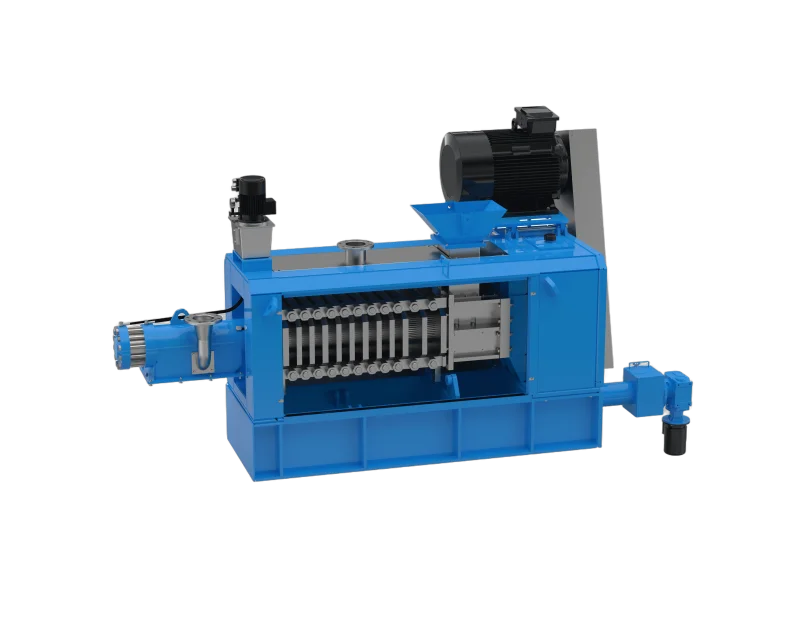
Consider a mid-scale poultry slaughterhouse in Southeast Asia processing 80 tonnes of live weight per day — a scenario similar to Liande's Malaysia 80-ton slaughter waste treatment project. At that throughput, the by-product stream runs continuously through shift hours. A hydraulic press would create a bottleneck: operators would spend significant time loading, pressing, and unloading batches while cooked material queued upstream. A continuous screw press eliminates that constraint, matching the flow rate of the cooker and dryer and keeping the entire line in balance.
By contrast, a small artisan lard producer or a specialty pet food ingredient processor handling 2–4 tonnes of cooked pork fat per day may find a hydraulic press entirely adequate — for the full system overview, see our pork lard rendering machine solution page. The lower capital outlay, simpler mechanical design, and tolerance for slower cycle times align well with low-volume, high-margin specialty operations where automation is not a priority.
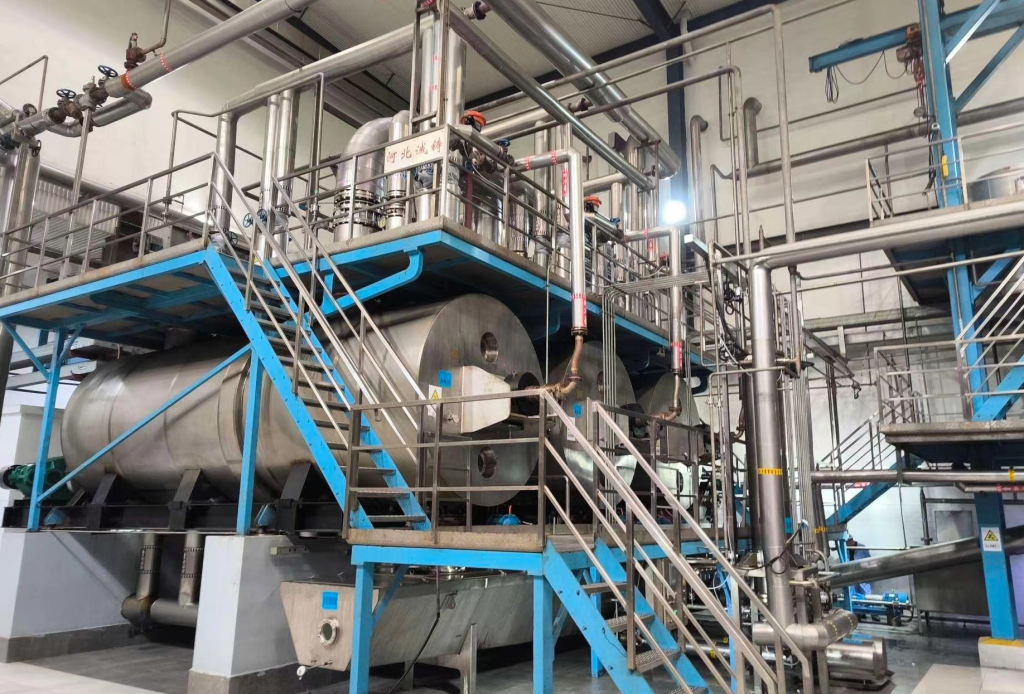
A screw press does not operate in isolation. In a well-designed rendering line, pressed fat flows directly to a horizontal decanter centrifuge or fat filtrator for further clarification, while the pressed cake moves to a meal cooler before bagging. This tight integration is straightforward with a screw press because its output is continuous and predictable in flow rate and moisture content.
Maintenance on a screw press centers on wear parts: the screw flights, barrel screen, and end-cone pressure adjustment. Screen replacement intervals depend on material abrasiveness — bone-heavy cattle material wears screens faster than soft poultry tissue. Liande's screw press designs use hardened alloy wear components to extend service intervals and reduce downtime.
Hydraulic presses have fewer rotating parts and simpler mechanical assemblies, but their batch nature means more frequent operator intervention, higher labor cost per tonne processed, and greater variability in cake moisture from cycle to cycle.
When calculating total cost of ownership over a 10-year plant life, the higher capital cost of a screw press is typically recovered within 2–4 years through improved fat yield, lower labor cost, and reduced energy consumption per tonne — particularly at throughputs above 10 tonnes per day. For guidance on building the full processing line around your press selection, see our overview of rendering plant solutions.
The right fat press is determined by three variables above all others: your daily throughput, your processing model (continuous vs. batch), and your target fat recovery rate. For the vast majority of commercial rendering plants — poultry, livestock, or mixed species — a continuous fat press machine in the screw configuration is the correct engineering choice. It delivers higher fat yields, lower labor intensity, and clean integration with automated upstream and downstream equipment.
Hydraulic presses retain a legitimate role in small-scale or specialty operations where batch flexibility and lower upfront investment outweigh the efficiency advantages of continuous pressing. If your operation sits near the 8–10 tonne per day threshold, a detailed capacity and ROI analysis — factoring in local fat prices, labor costs, and planned expansion — should guide the final call.
Liande Machinery engineers complete rendering lines built around your specific throughput and product goals. Whether you are sizing a new facility or upgrading an existing press station, our team can help you select, configure, and integrate the right equipment. Contact Liande Machinery to discuss your project requirements with a rendering plant specialist.
 Industry Success Case
 Industry Success Case
 Industry Success Case
 Industry Success Case

Chinese (Simplified)

English

Russian