
Industrial-Grade Animal Fat Primary Rendering
Explore MoreFood-Grade Animal Fat Primary Rendering
Explore MoreIn October 2026 the animal fats market produced an "inverted" price board.Fastmarkets reported that European Category 3 mixed animal fat (15% FFA) fell to EUR 940/t on 9 October, down EUR 65 from 18 September,while Categories 1 and 2 mixed fat (up to 30% FFA) rose EUR 35 over the same period to EUR 885/t.Tallow, which is scarce, is falling; lard-type grease, which is more plentiful, is climbing — pricing in animal fats is splitting into layers.
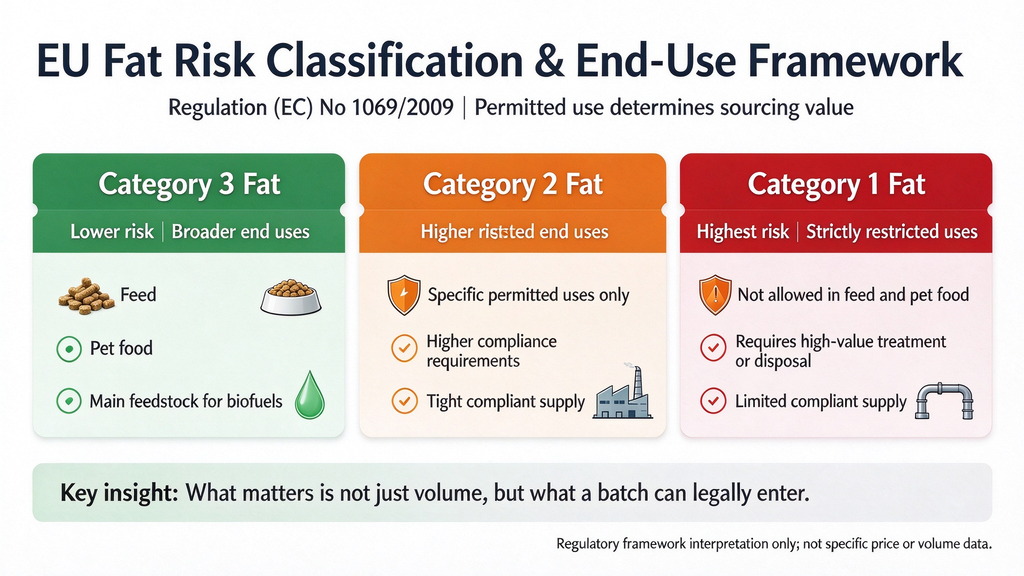
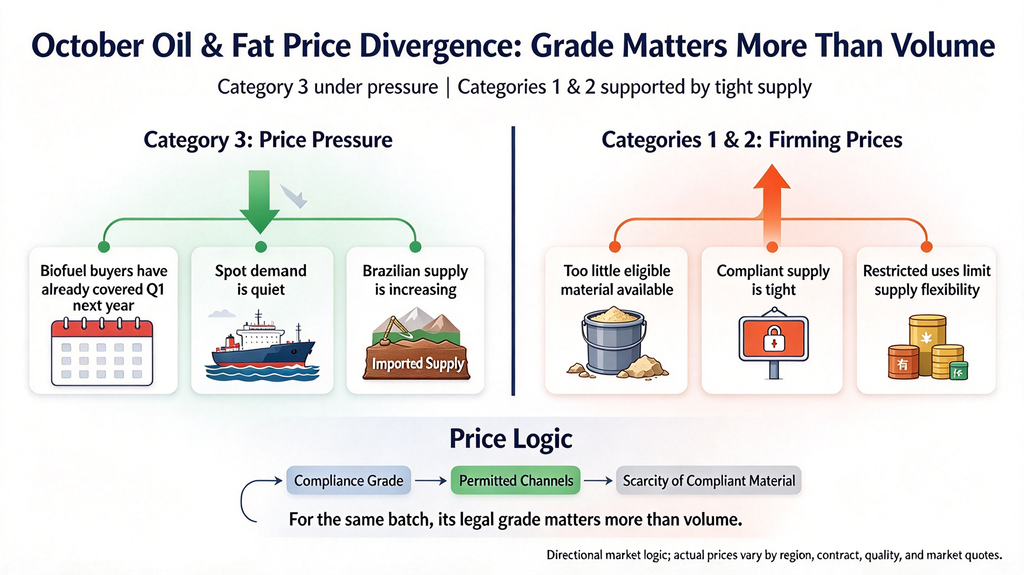
1. The divide is grade, not volume
Under EU Regulation (EC) No 1069/2009, Category 3 fats may enter feed and pet food and are also the main feedstock for biofuels;Categories 1 and 2 carry higher risk, face restricted uses and are short of compliant supply. That is exactly where October split:Cat 3 slid because biofuel producers have already covered first-quarter purchases, spot demand is thin and Brazilian volumes are flowing in;Cat 1 and 2 climbed simply because usable raw material is scarce. Who you can sell to — and in which grade — now matters more than how much you produce.
2. Upstream: cattle contracting, hogs steady
US federally inspected cattle slaughter reached 20.883 million head year-to-date through 3 October, down nearly 7% year on year, per Fastmarkets;USDA data show August edible tallow output down 14% and technical tallow down 13%.Hog slaughter was flat over the same period (-0.6%), and the autumn slaughter season will add more pork-derived fat.The paradox sits in price: tight cattle fat is under pressure, while more plentiful choice white grease is up year on year — 55–61 cents/lb in Minnesota in the week to 9 October,against 53.75 cents/lb a year earlier. Upstream has already handed over pricing power.


3. Three legs of demand, only two bearing weight
Biofuels visibly weakened in October as producers deferred purchases. Feed and pet food demand is stable but cannot fill the gap left by fuel.The third force is trade flow: after the US imposed 50–55% duties on Brazilian animal fats,Brazilian volumes turned to Europe, and more than 10 Brazilian plants have now been approved by the European Commission.When price is set by downstream use structure, a single-product, single-grade model magnifies risk.
On a market that prices by layer, the real moat for a processor is the ability to keep one batch of raw material moving between food,feed and industrial grades — and that depends on what the rendering and refining line can actually make of it.Liande Oil Equipment focuses on animal fat rendering and refining equipment, providing complete solutions covering melting kettles, disc dryers, pressing, centrifugation and waste gas treatment, serving customers in many countries around the world.
数据来源:https://www.fastmarkets.com/?p=102892/
https://www.fastmarkets.com/insights/us-rendered-fats-supply-picture-diverges-as-fall-slaughter-season-begins
https://mymarketnews.ams.usda.gov/viewReport/3510
 News
News
 Industry Success Case
 News
News
 Industry Success Case
 Uncategorized
News
Uncategorized
News

Chinese (Simplified)

English

Russian