
Industrial-Grade Animal Fat Primary Rendering
Explore MoreFood-Grade Animal Fat Primary Rendering
Explore MoreCloudy rendered fat is almost always caused by one of three things: residual moisture from incomplete dehydration, fine protein and bone particles that escaped oil-residue separation, or phospholipids and gums that were never removed during refining. Fix those three variables in the right order — dehydrate fully, separate aggressively, then polish — and the fat clears up batch after batch, regardless of whether you run tallow, lard, poultry fat, or mixed slaughterhouse by-product.
Below is a practical breakdown of what causes the haze, how to tell the failure modes apart, and where in the rendering line to intervene.
Clear tallow or lard at processing temperature should be transparent with a light amber color. When it looks cloudy, hazy, or milky, you are seeing light scattering off particles that should not be there — micro-droplets of water, suspended protein fines, bone dust, oxidized pigments, or phospholipid micelles.
Two quick diagnostic checks tell you almost everything you need to know before adjusting equipment:
These two tests cost nothing and immediately tell your operators which part of the line to look at.
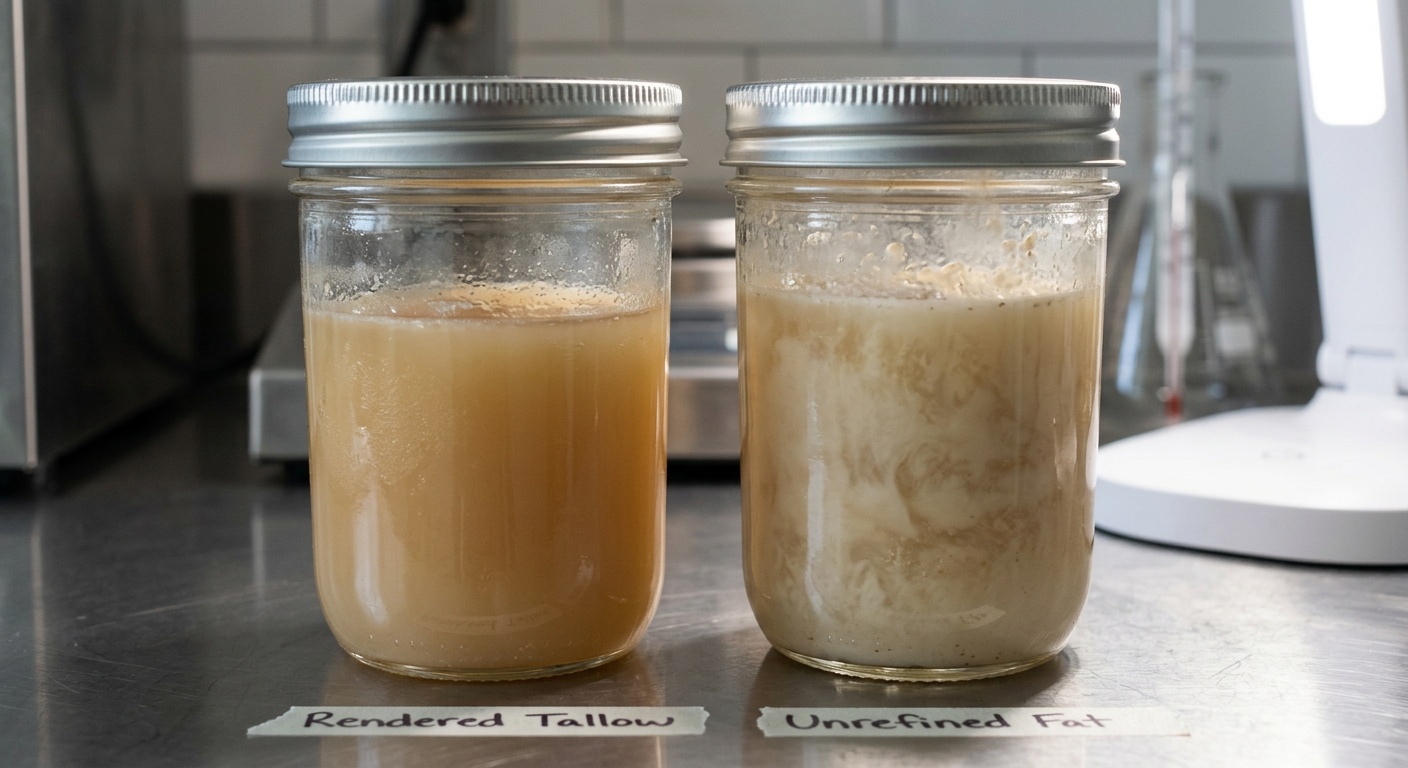
The single most common reason for cloudy fat is water that never left the product. Animal fat tissue carries a high moisture load, and unless the melting kettle or disc dryer drives that moisture off under controlled heating and proper vapor evacuation, micro-droplets remain emulsified in the oil phase. They scatter light immediately and accelerate hydrolysis over the next 24–72 hours, pushing FFA upward and shortening shelf life.
Typical failure points we see at customer plants:
A continuous line should evacuate vapor smoothly and consistently. If you see fluctuating vapor flow or hear gurgling in the discharge, you are almost certainly shipping wet fat. Our industrial guide to batch and continuous animal fat rendering walks through how each configuration handles moisture removal differently.
When solids carry over into the fat stream, you get a haze that does not settle quickly because the particles are too fine to drop out under gravity in normal storage time. They also continue to release color and odor compounds, so the fat darkens and develops off-notes within days.
This usually traces back to one of three places:
For instance, a mid-sized beef rendering plant we worked with was producing technical tallow that buyers kept rejecting for “sediment.” The melting kettle and press were fine. The problem was that the centrifuge bowl had not been opened and cleaned on schedule, so its separation efficiency had quietly dropped. Restoring the cleaning interval brought the haze back under control without any process change upstream.
If your fat passes the hot jar test and the cold smear test but still goes cloudy on cooling or storage, the problem is downstream — phospholipids, gums, soaps, and pigment bodies that survived rendering and now precipitate as the fat sets.
This shows up most often when:
Edible-grade lard and premium chicken fat are especially sensitive here. A buyer paying a premium for clear, neutral fat will reject product that turns milky in cold storage even if every analytical number is in range. The chicken rendering plant write-up covers how the refining sequence ties directly to visual clarity of the finished oil.
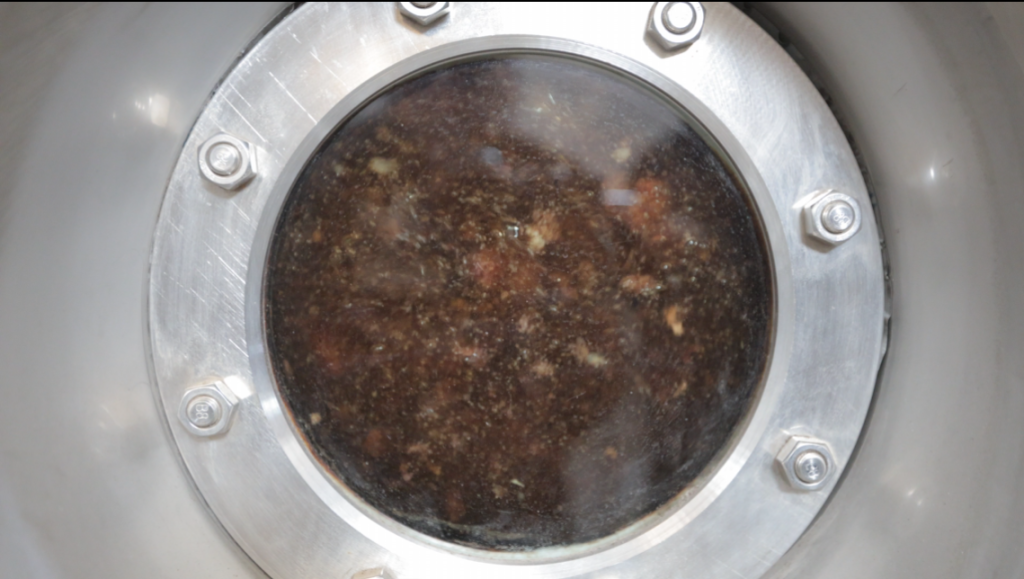
You do not need a lab to localize the problem. Pull samples at four points and line them up in identical glass jars:
Look at all four jars at process temperature, then again after cooling overnight. The point at which clarity first degrades tells you exactly where to intervene:
This four-jar protocol takes one operator about thirty minutes per shift and replaces a lot of guesswork.
Once you know where the haze starts, the corrections follow a predictable order. Always work upstream to downstream — fixing the centrifuge will not help if the dryer is still pushing wet fat into it.
Verify vapor evacuation is unobstructed, the condenser is clean and correctly sized, and the negative-pressure system holds vacuum. If you are running batch, do not shorten the dehydration phase to push throughput — wet fat costs more in rejections than it saves in cycle time. Our overview of air-cooled vs water-cooled condenser systems is useful when the condenser turns out to be the limiting factor.
Match the separator screen to the actual raw material — poultry, pork, and beef by-products produce different fines profiles. Inspect screens weekly, not monthly.
A centrifuge cleans up residual fines and water; it cannot compensate for an upstream line that is failing. Keep desludging intervals and bowl cleaning on a fixed schedule.
Technical tallow for biodiesel tolerates lighter refining. Edible lard or premium poultry fat needs full degumming, bleaching, and deodorization to stay clear through cold storage.
Even fat that left the line clear can turn cloudy in storage if handling conditions are wrong. Three quiet killers:
Insulated storage, dry nitrogen blanketing where the grade justifies it, and dedicated lines per product grade preserve the clarity you worked to produce.
If cloudy fat is a recurring issue rather than an occasional one, the answer is usually in the plant layout and equipment matching, not in operator behavior. Undersized vapor handling, mismatched separator and press capacities, or a centrifuge selected for a different raw material profile will produce hazy fat no matter how skilled the crew is.
When we design a line, dehydration capacity, solids removal, and refining intensity are sized together against the actual raw material — fresh slaughterhouse fat behaves very differently from aged trim, and beef bone-in input loads the system differently from pure pork backfat. Getting that match right at the engineering stage is what makes consistent clarity an output of the process rather than a daily struggle.
If your plant is producing cloudy fat and you are not sure where the failure point is, the team at fatrenderingplant can walk through your line layout, raw material profile, and current equipment configuration to pinpoint the root cause. Reach out through our contact page or browse the full equipment range to see how each stage — melting, drying, separating, refining, and odor control — contributes to clear, stable output.
 Industry Success Case
 News
News
 Industry Success Case
 Uncategorized
News
News
Uncategorized
News
News

Chinese (Simplified)

English

Russian