
Industrial-Grade Animal Fat Primary Rendering
Explore MoreFood-Grade Animal Fat Primary Rendering
Explore MoreA continuous animal fat rendering line moves raw adipose tissue through a fully piped sequence — crushing, controlled heating in a disc dryer, oil-residue separation, centrifuge polishing, and refining — without breaking flow between batches. The result is steady-state production, more uniform oil quality, and lower labor compared to kettle-based batch rendering. This guide walks the material flow stage by stage so engineers and plant managers can see exactly where yield, quality, and odor are made or lost.
Continuous rendering replaces the start-stop cycle of a fat melting kettle with a steady throughput of material across linked equipment. Raw fat enters the front end at a metered rate, and finished oil leaves the refining section at a matching rate — every unit in between operates at a stable thermal and hydraulic balance.
The defining piece of equipment is the disc dryer, which simultaneously heats, dehydrates, and partially melts the raw fat as it travels axially through a rotating shaft of heated discs. Because the material residence time is governed by feed rate and rotation, the process can be tuned to a narrow operating window and held there for hours or days.
For a deeper comparison of process types, see our industrial guide to batch and continuous animal fat rendering.
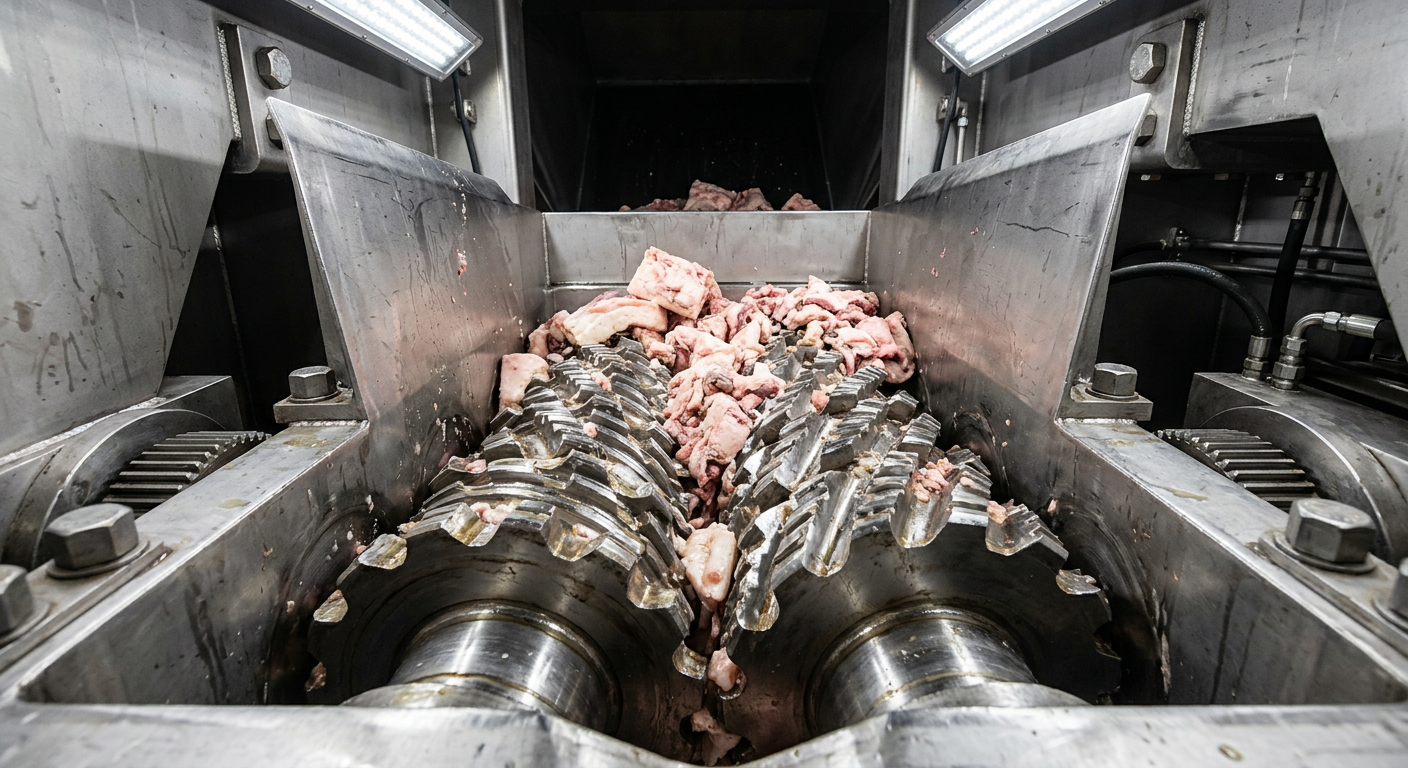
The line begins at the reception hopper, where raw adipose tissue, fat trimmings, and soft offal from slaughterhouse lines are gravity-fed or screw-conveyed into a crusher. Particle size reduction is critical: uniform pieces give predictable heat transfer downstream and prevent dryer hotspots.
For example, a beef trimming plant feeding a continuous line will often install a twin-shaft crusher upstream of a buffer bin, so that the disc dryer sees a steady volumetric feed even when slaughter rates fluctuate during the shift.
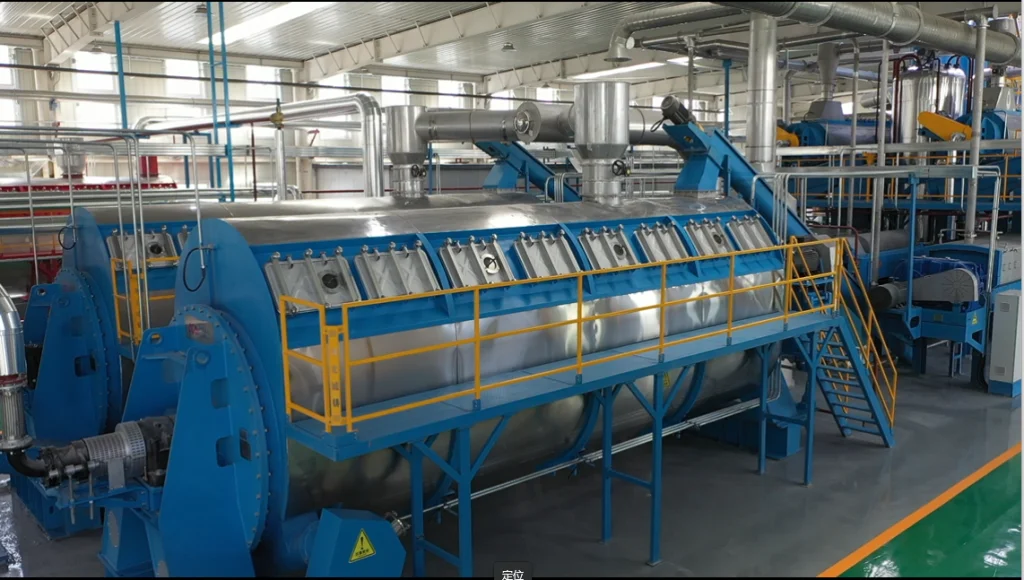
The disc dryer is the thermal core of a continuous line. Crushed raw fat enters one end of the horizontal cylindrical shell, where steam-heated hollow discs mounted on a slowly rotating shaft conduct heat directly into the material. As the discs rotate, paddles advance the material toward the discharge end while constantly exposing new surface area to the heated metal.
Operating the dryer under controlled heating and, in many configurations, slight negative pressure keeps the fat from oxidizing or darkening. The vapor stream goes to a condenser — and choosing the right design matters; our overview of air-cooled versus water-cooled condenser systems covers the trade-offs.
Material discharged from the disc dryer is a hot mixture of liquid fat and solid greaves. A continuous oil-residue separator — typically a screw drainer combined with an oil press — splits the two streams while the material is still warm and free-flowing.
Mechanical efficiency at this stage directly controls overall oil yield. If too much fat leaves with the cake, downstream refining cannot recover it. For practical guidance, see our article on how to extract oil from animal fat.
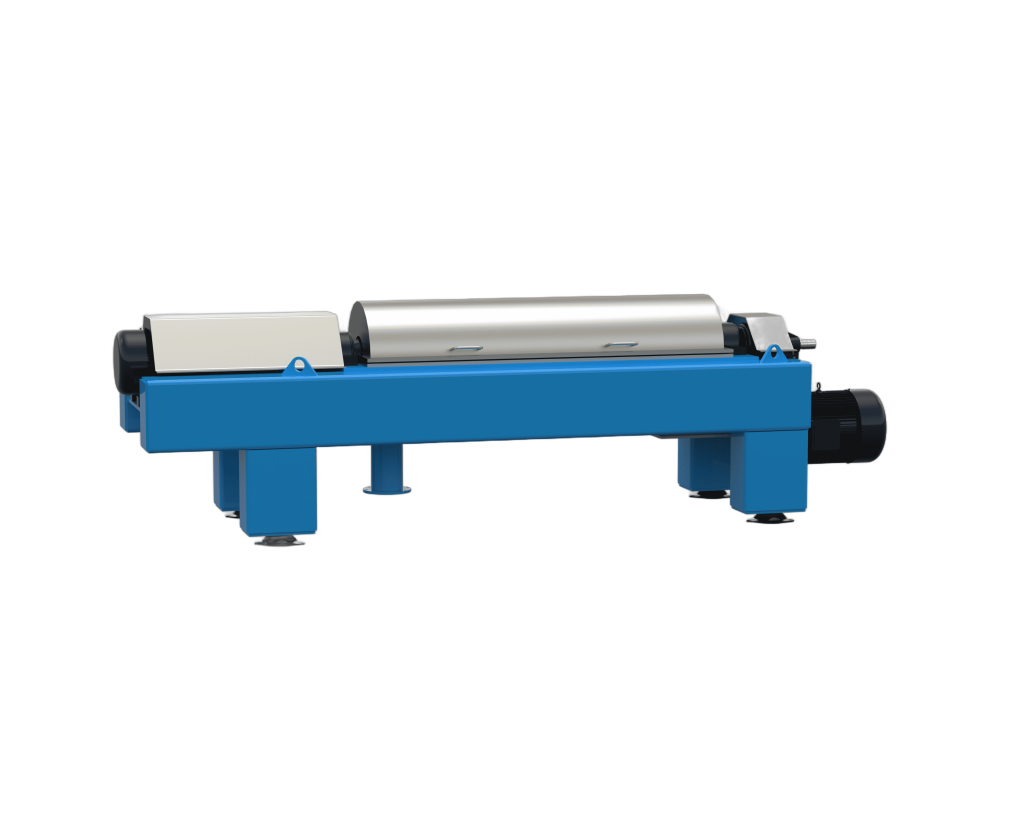
Crude oil from the separator still carries fine protein particles and emulsified water that would shorten storage life and depress quality. A horizontal decanter centrifuge or a high-speed disc-stack centrifuge — often both, in series — handles this polishing step.
For instance, a poultry rendering operation processing soft chicken fat will typically rely heavily on disc-stack centrifugation because the raw material yields a finer particulate load. Our case write-up on premium chicken fat recovery illustrates how centrifuge selection shapes final product grade.
Once polished, the oil enters the refining section, where it is upgraded from crude rendered fat into a stable, market-grade product. The exact configuration depends on whether the buyer requires edible-grade tallow or lard, technical-grade fat for soap and oleochemicals, or biodiesel feedstock.
Refining is also where unverified yield or temperature claims become misleading — the right operating window depends on raw material origin, FFA level, downstream specification, and customer commercial requirements. A modular refining skid lets the plant adjust its severity to match each order.
A continuous line generates a continuous vapor stream — and how that stream is handled determines whether the plant is a good neighbor or a complaint magnet. Vapor from the disc dryer and deodorizer is routed through condensers, where most water and condensable organics are recovered as liquid. Non-condensable gases carrying odor compounds go to a dedicated treatment train.
For a fuller engineering perspective, see our guide to controlling odor and emissions in a rendering plant.
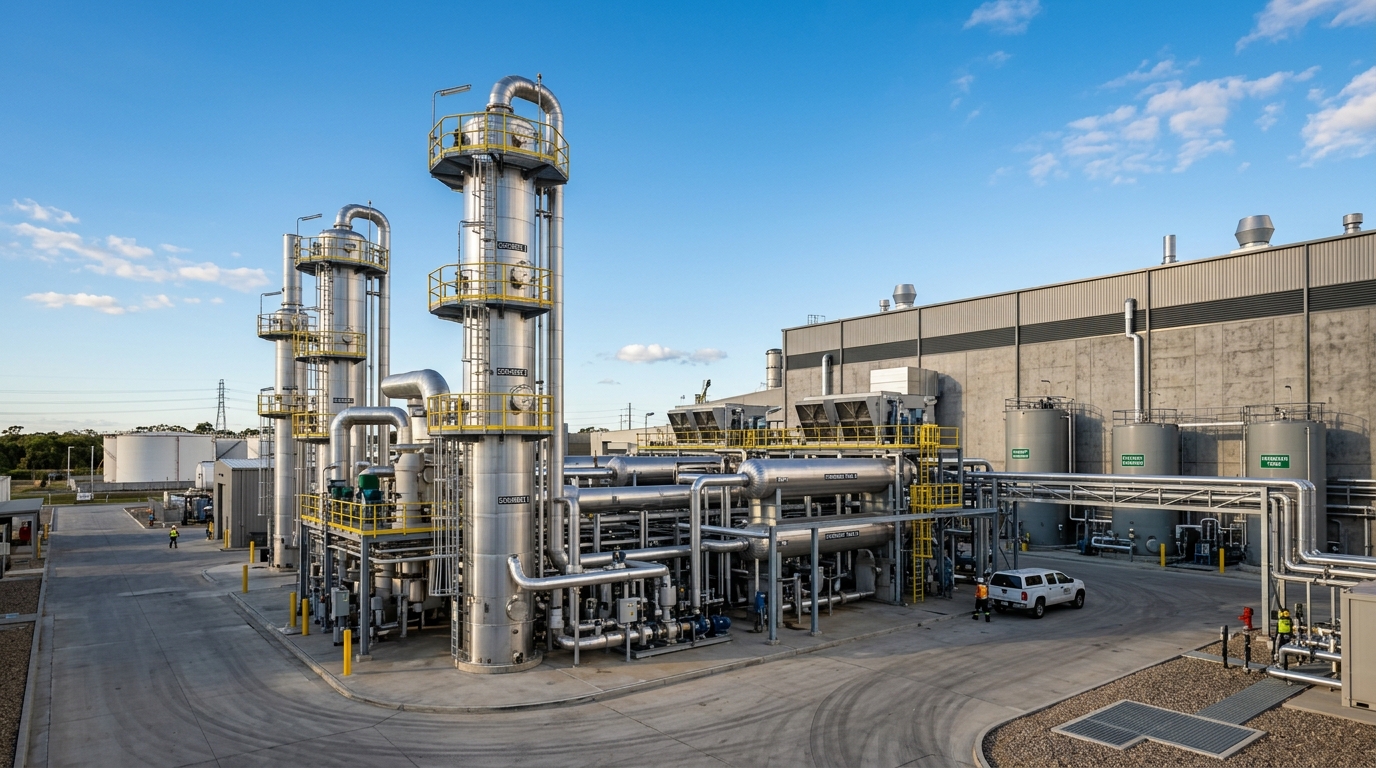
Refined oil leaves the final polishing filter and flows to insulated, heated storage tanks held at a temperature that keeps the fat liquid without accelerating oxidation. A sampling loop on each tank allows the QC lab to verify FFA, moisture, impurities, peroxide value, and color before release.
From storage, oil moves out by tanker truck, rail car, or IBC depending on the buyer. Continuous lines often pair with automated load-out skids that combine metered pumping, in-line filtration, and a final sample point — so every shipment carries a traceable specification.
This is also where the plant’s layout discipline pays off. Storage tank placement, sampling access, and load-out flow should be designed in from day one, as discussed in our piece on animal fat rendering plant layout design.
A continuous line is not automatically the right answer for every operation — but for plants with consistent raw fat supply and steady throughput, the engineering economics are hard to argue with.
For example, the Malaysian 80-ton daily slaughter waste treatment project illustrates how a continuous configuration absorbs steady upstream volume without the labor profile of a batch operation.
Mapping a continuous rendering line to your specific raw material — beef trimming, pork fat, poultry soft tissue, fish offal, or mixed slaughterhouse by-product — is where engineering decisions are made. Crusher type, disc dryer sizing, centrifuge configuration, refining severity, and odor control all shift depending on what enters the front end and what specification leaves the back end.
fatrenderingplant designs and builds continuous animal fat rendering lines tailored to raw material, throughput, and product grade. If you are scoping a new facility or debottlenecking an existing one, talk to our process engineering team or explore our full rendering solutions and equipment catalogue to start mapping your line.
 Industry Success Case
 News
News
 Industry Success Case
News
News
Industry Success Case
News
News
 News
News

Chinese (Simplified)

English

Russian